
Housed after 20 years on the streets, Chris has a story to tell
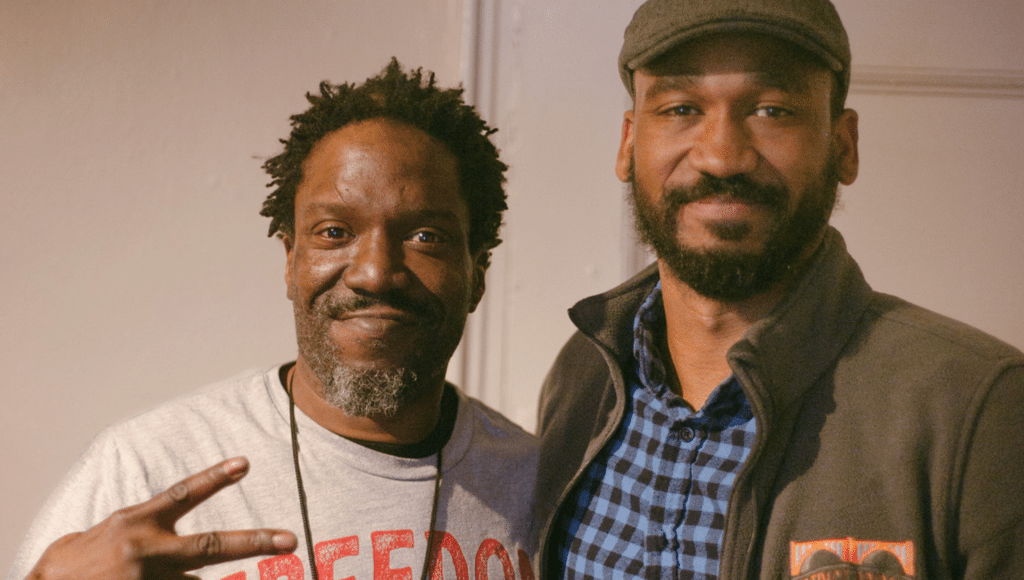
It was within the MLK Library, surrounded by poetry and literature he studied to pass his time, that Chris first started dreaming of writing a book. At the time, he was still homeless, and D.C.’s public libraries provided a space to simply exist as a person without a home. As a young adult, the tragic loss of his parents had destabilized his life, and he would fight against homelessness for the following two decades. As is custom with the cyclical nature of poverty, surviving life without shelter brought on new traumas and drove new reliance on substances, and his hardships were layered by time spent in prison. So Chris knew he had a story to tell.
The throughline of his life, of all his experiences, is his own determination to overcome. He first connected with District Bridges in 2022, which catalyzed a friendship with a case manager on our staff who would spend the next four years working to see Chris housed. The stint Chris spent in incarceration proved an added challenge to the housing journey, repeatedly turned away from units after he’d journeyed deep into the bureaucratic process of securing a specific programmatic opportunity. Chris had the sense some organizations gave up hope for him. Despite the months and years he spent diligently working within a program, case managers were repeatedly unable to seal the deal and get him off the streets. But Chris never gave up, he just started writing.
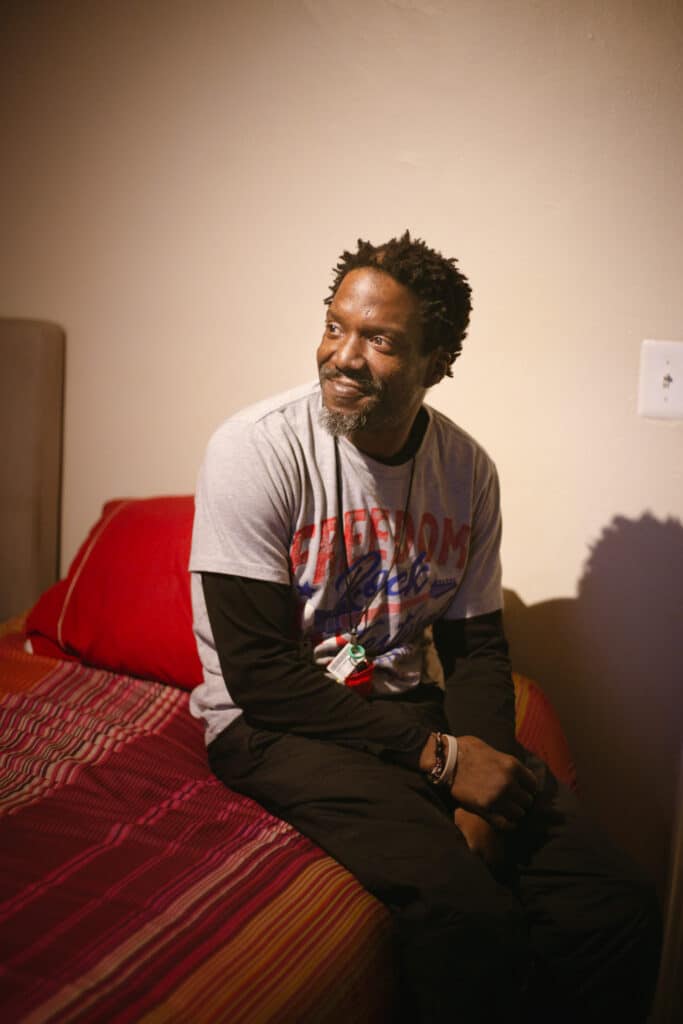
He describes the books as his teachers, learning from the material around him and working to pen his own experiences. And his experiences have been plentiful— from weathering hurricane Katrina from a neglected prison cell in Texas, to witnessing a friend thrown into a trash compactor during an encampment clearing— there is a great depth to his grief. He remembers often reflecting in real time, to his friends, “you know, someone should make a movie about us.” As he devoted time to his writing and creativity, it became increasingly clear that perhaps he would be the one to tell their story.
“I had to restore my faith, rebuild myself,” Chris reflects. “I don’t think you can actually get a chance to see yourself in your real problems with anybody around. I think the only time you really get help for yourself and really act on it, is in solitude.” This ethos, leaning into lonely and dark times to improve yourself, has carried Chris through incredibly challenging circumstances. During his time in prison, Chris was eager to pursue every opportunity to build a better life for himself. He studied business, law, finance, and Spanish. Despite traumatic experiences within the carceral system, he fixated his attention on carving out opportunity.
This knowledge would come in handy years later, when his passion for writing had him dreaming of leveraging his business knowledge to provide opportunities for other people to create art, too. He shared his first manuscript of his life’s story with the librarians, who affirmed his talent and even applied to grants on his behalf, eager to see his passions nurtured.
In 2025, his long wait for a place to call his own finally came to an end. Thanks to the tireless work of our case managers and our partners at Miriam’s Kitchen, he was able to move into a unit in Adams Morgan with his wife, who is expecting their first child. His own space to rest, breathe, and take care of himself has fueled his creativity and his dreams. He is currently working on plans for a space for homeless creatives to have resources to create. He envisions the space providing equipment for theatre productions, film, podcasting, writing, and visual arts. Knowing firsthand the most difficult challenges to life on the streets, it would also include a laundry room. “We would have a nice behavior contract, no drugs, no playing around, and you have to have something to do.” For many unhoused people, having a place to exist can be hard to come by. Chris’ space would provide that, and equip people to grow their creative skillsets.
He wants creative outlets to provide to others what writing has provided for him. “I can’t travel, I can’t go to Hawaii, you know, I can’t escape what I see every day,” he reflects. “The only way that I found to escape all of my madness, the noise and what I go through is to write… And that’s what we’re trying to encourage people to do.”